Jon Solo Sebastian 03/09/2025:
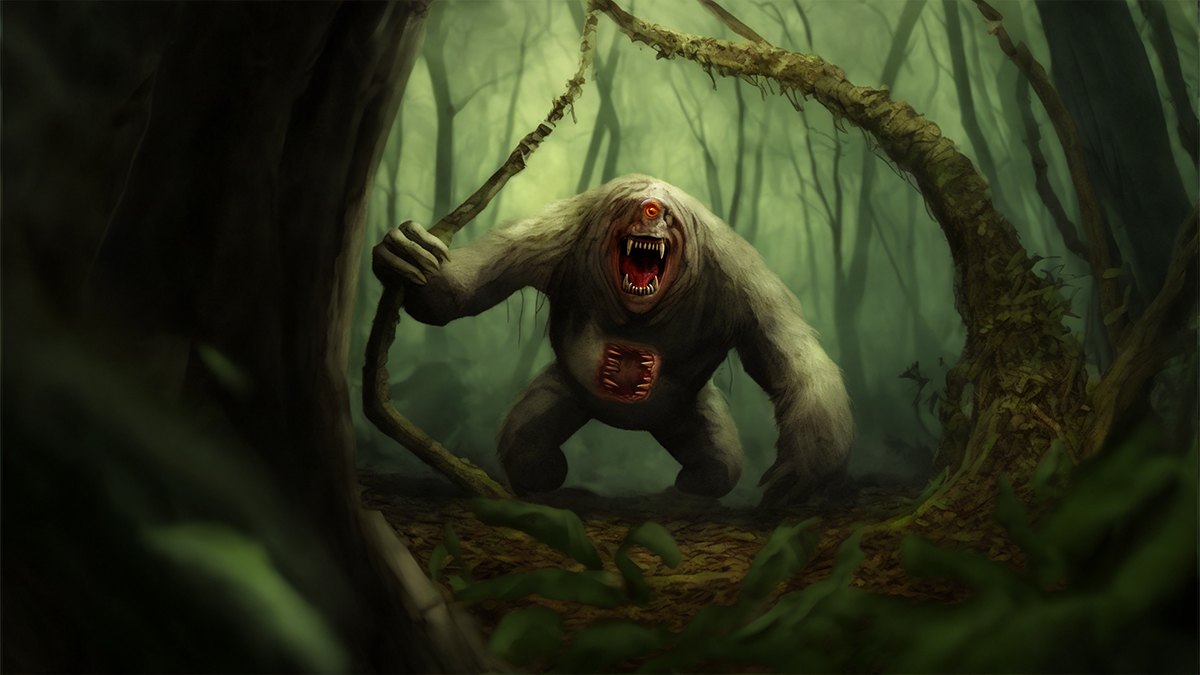
Imagine taking a tour or a hike through the Amazon forests of Brazil, Venezuela, or even Paraguay when out from a break in the trees, comes an elephant sized Sloth-like creature. Judging by its size, you could guess the beast weighs more than a thousand pounds. Unlike the Sloth, this beast of Brazilian folklore is quite fast and agile. It rips through the brush charging toward you on all fours, but then almost as if it’s trying to show dominance, it rises up like a bear to stand on its hind legs using its tail to maintain balance.
The large red/brown furred monster that smells worse than one hundred skunks spraying a broken sewage line seems faster in its bipedal form as it’s getting closer to you. You’re trying to escape, and praying you’re able to, especially after you take note of its long and sharp claws that would give Freddy Krueger nightmares.
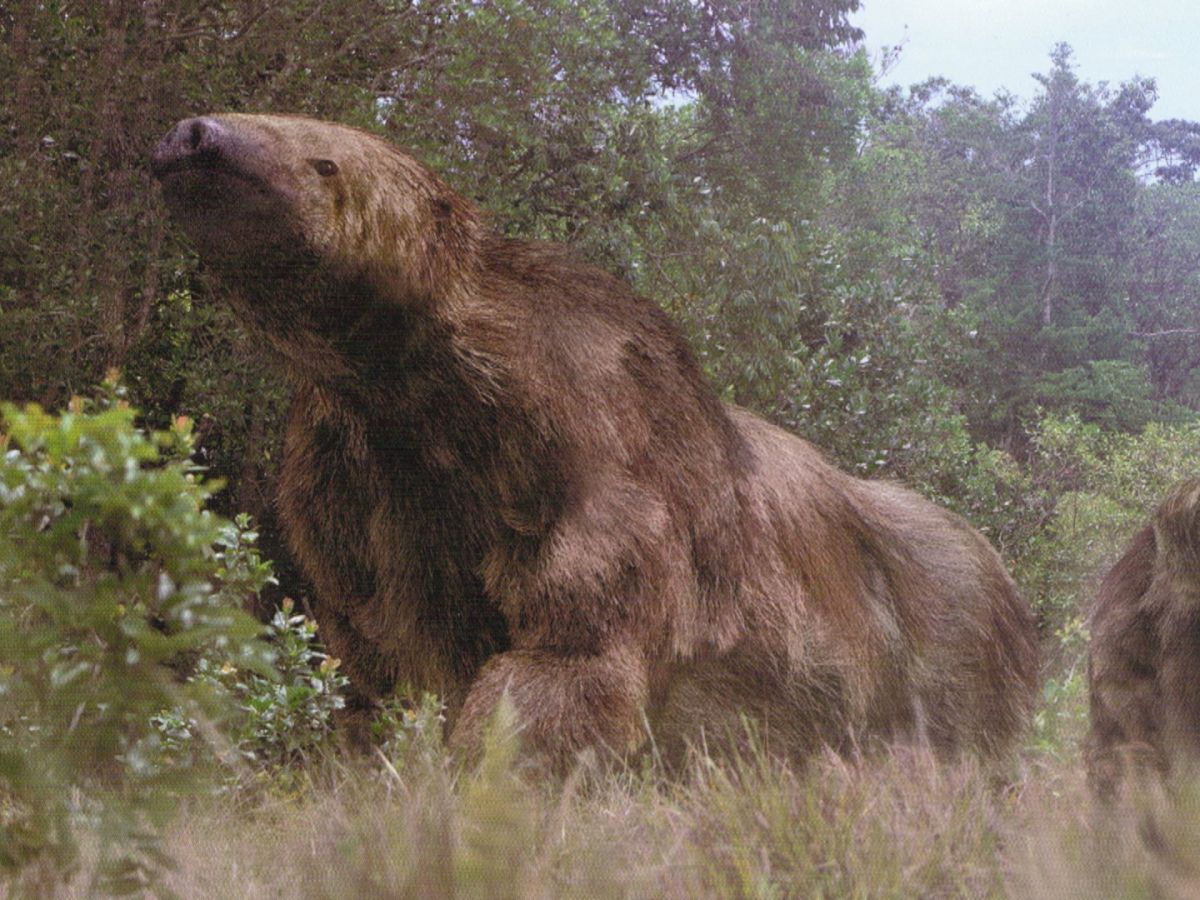
The beast I described in the above scenario is more in line with the extinct Megatherium Americanum in size, but if you believe the witnesses descriptions of the Mapinguari, its visual characteristics are a bit different. The Mapinguari, or Brazilian Bigfoot could be a long lost ancestor of the giant ground sloth (Megatherium Americanum) that lived in the area 10,000 years ago. To paint a picture for you, the Megatherium was ten times the size of the living sloths we’ve come to be familiar with, and they weighed upwards of four tons. To make the beast even more terrifying, it stood over twelve feet tall when it stood on its hind legs. Researchers believe it to be the largest bipedal mammal to have walked the earth.

What is the Mapinguari, and what does it look like?
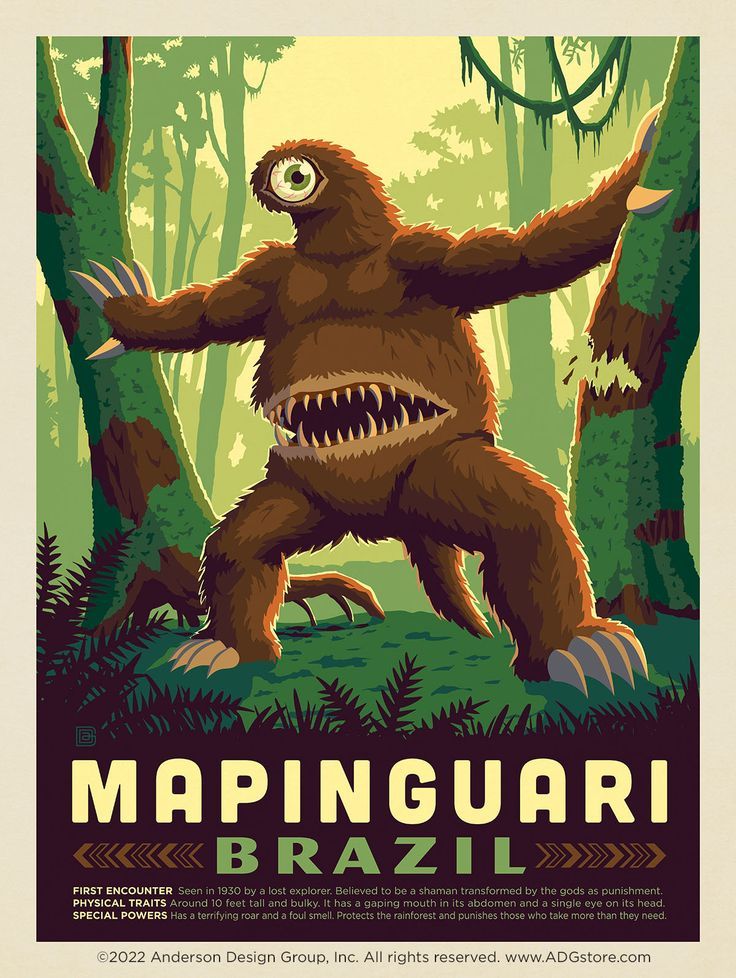
While the Mapinguari isn’t as large as its long distant cousin, it’s still a terrifying sight to see and to smell; if it exists. One of the downsides in reported sightings of strange creatures in the Amazon is that there are likely dozens, or more, species yet to be discovered there. So when someone sees an unknown or unfamiliar creature, they tend to call it a Mapinguari whether that’s what they’d just seen or not. That’s how descriptions of the beast get a bit jumbled. I’ll give you the wild and bizarro-land version, and the more common version of its description.
As we can see, the two descriptions sound like two entirely different beings. My money is on the ground-dwelling sloth version being the Mapinguari, but what in the world is the other one? Are people actually seeing that creature?
My understanding of their backwards feet on the mouth-bellied version is that they walk on their knuckles rather than the bottoms of their feet. There have been tracks found that are roughly one inch deep with three knuckled digits. The creepiest part of these creatures, though, is the second mouth on the belly. Why, why does it need two mouths? What is it eating? We’ve either got ourselves another Skinwalker Ranch situation over in the Amazon, or there is a lot yet to be discovered on our planet.
What it eats is just as inconsistent as the descriptions. Some sources say it is a herbivore, while others blame the beast for slaughtering and eating their cattle. Maybe they eat meat and veggies?
There is something strange going on on this planet with the amount of things happening to cows over the years. Some say aliens do it, some blame various cryptids or interdimensional beings for herds of cattle being wiped out. Will we ever discover the truth behind it?
One last thing I want to mention about this fascinating nocturnal monster is the sounds it allegedly makes. According to witnesses who’ve heard the beast, the call sounds like the Mapinguari could make a pretty solid vocalist in a metal band. It is said to have both a thunderous howl or bellow, and a high pitched shriek that gives the entire Amazon goosebumps when it belts out its latest unintelligible lyrics into the night.
Now that you know a little bit about the Mapinguari, are you ready to book that trip to the Amazon?


 jonsolosebastian.org