Jon Solo Sebastian 07/20/2025:
Ogopogo, the Canadian Sea Monster, is one of many popular sea creatures in the world. The Loch Ness Monster, also known as Nessie, is at the top of the list when it comes to sea creatures, but Ogopogo, Bessie, and Muckie of Muckross Lake are famous and mysterious, as well. I’ve said it before, but there are far too many sightings of creatures like these for them all to be fake or misidentified. Today, Ogopogo is on the menu… not to eat, but to learn about!
What is Ogopogo?
Is it a log? Is it debris? Is it a creature thought to be long extinct? No one can say for sure, but with over 200 eyewitness accounts, and allegedly stronger evidence than the infamous Nessie, there must be something folks are seeing in Lake Okanagan in British Columbia, Canada. While its history of sightings dates back further than 1926, there is one sighting that stands out above the others. Near the shore of Lake Okanagan, thirty cars filled with passengers witnessed serpentine humps rising and falling through the water leaving a large wake behind them. All of the witnesses were in agreement that they had just seen Ogopogo, which makes it difficult to discredit this sighting of the legendary sea creature. What could it be? This is an idea I never would have thought of—“Okanagan Lake has temperamental weather conditions, which might explain the apparition, and an ill-defined lake bottom, which gives rise to speculation about long-trapped dinosaur eggs released by movements of the Earth’s crust.” If this is true, though, there is no evidence to prove it, would be one heck of a discovery. Trapped dinosaur eggs released and hatched after millions of years is a wild and exciting theory. I would think finding evidence of that would be very high on the radar of most cryptozoologists and scientists.
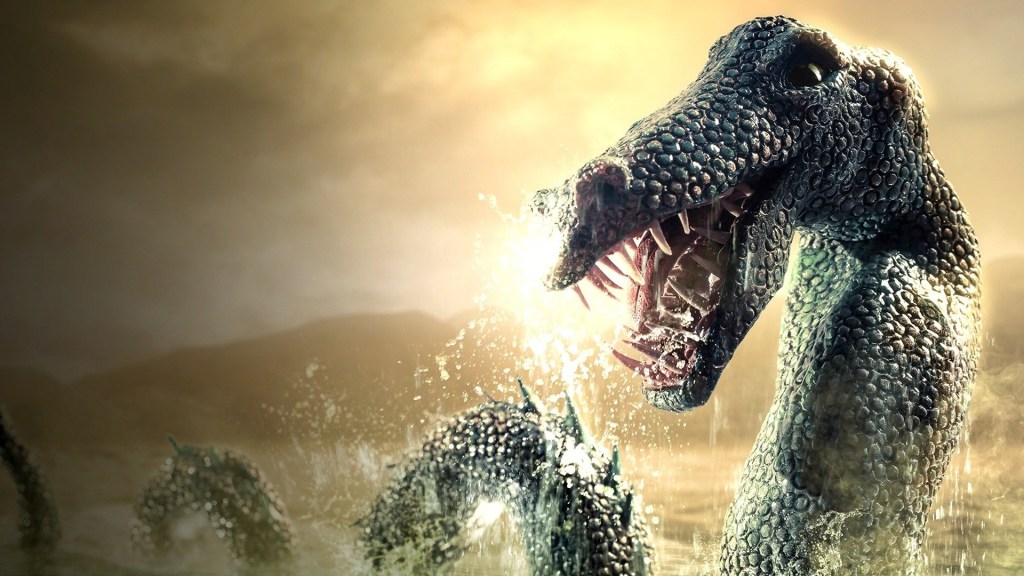
Ogopogo is typically described as being a long, snake-like creature with a head like a horse, a snake, a goat, or even a dragon. It’s approximately forty feet long, and doesn’t have any fins or appendages. Some eyewitnesses have stated the creature has horns on its head or long ears. It’s almost always described to have a bluish brown colored skin. Ogopogo, if real, is said to not be an aggressive creature.
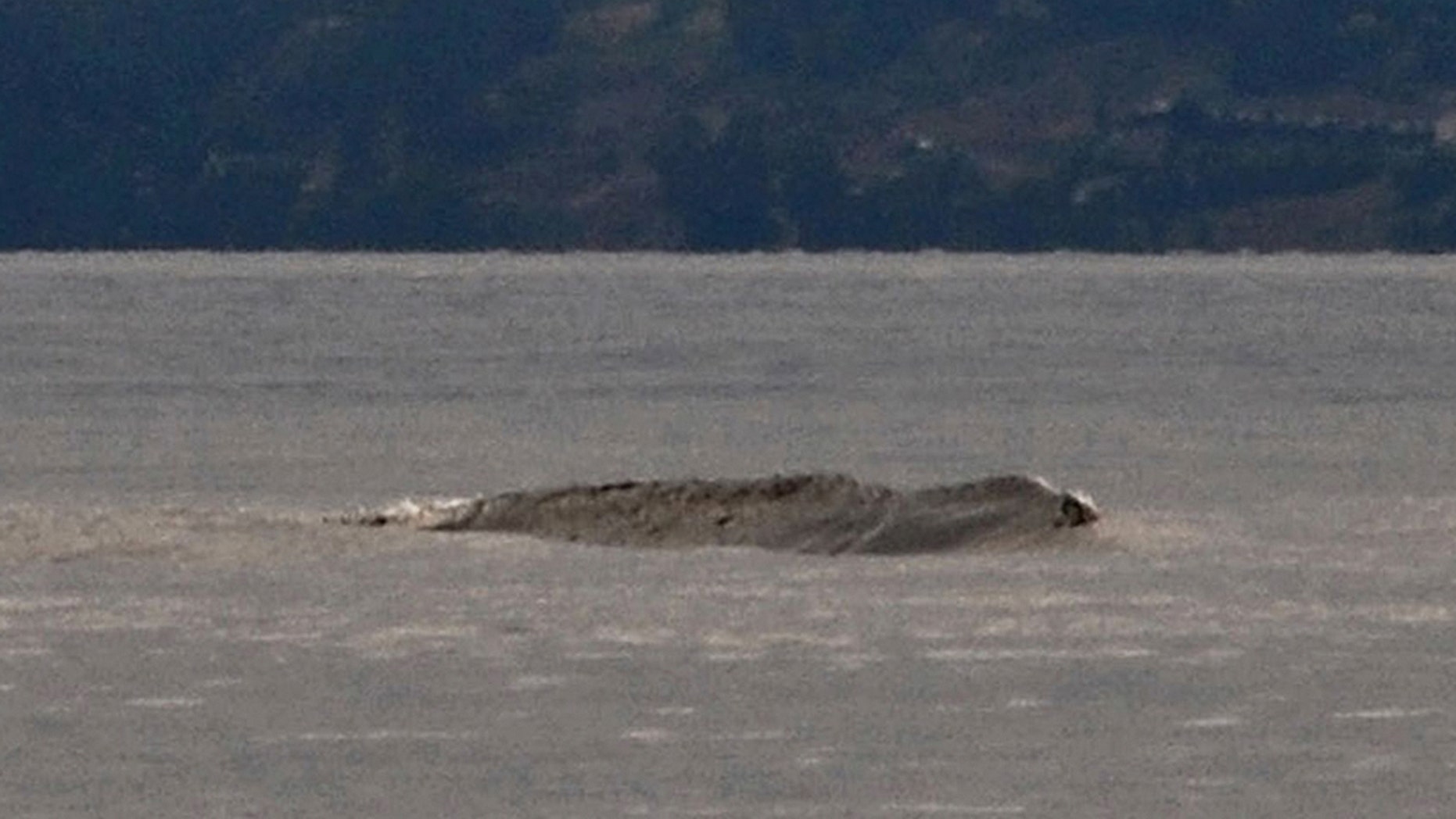
There hasn’t been any evidence or stories of it attacking anyone, but there were folktales told by Native American tribes that tell of a dangerous beast in the lake—is it Ogopogo, or something else is the question? “According to early Native American descriptions, Lake Okanagan’s monster is a violent, flesh-eating predator capable of turning humans into prey. Early Native Americans would not travel across Lake Okanagan without having livestock on board their crafts, ready to be sacrificed to the hungry beast. Today, Native Americans believe that the monster’s home is on a barren island called Rattlesnake Island. In addition to his island home, Ogopogo also frequents the headwaters of some of the rivers that spill into Lake Okanagan.”
I like to believe anything is possible, so I’d love it if Ogopogo were real, and if it could be traced back to dinosaurs—that would be an amazing discovery. There have been investigations over recent years where researchers held expeditions using remote survey devices to probe areas of the lake. They found no evidence, but that could just mean Ogopogo was in a different part of the lake, or deeper than the devices could go. The creature had been featured in an episode of Is It Real back in 2005. They analyzed footage and determined the images were not of the sea monster.

This is a common determination when it comes to most cryptids, but it doesn’t mean something isn’t out there, or at least wasn’t out there at one point in time. With more evidence than other sea creatures, I believe they need to keep searching. Our technology is becoming more and more advanced, so I feel it’s possible to scan and probe more parts of Lake Okanagan now than ever before.


 jonsolosebastian.org