Jon Solo Sebastian 09/19/2025:
I believe this is my first dip into vampires ever since I’ve started writing these blogs. I find it funny considering I’ve always been infatuated with vampires. They appear in my four-book short story series titled: The Hunted, which you can find on amazon.com. I have written about vampire-y things on here like Buffy the Vampire Slayer and Van Helsing, but this is the first of many vampire stories I will be writing in the future!
This particular story came to me via a Facebook post. The photo accompanying the post immediately grabbed my attention. See photo below.
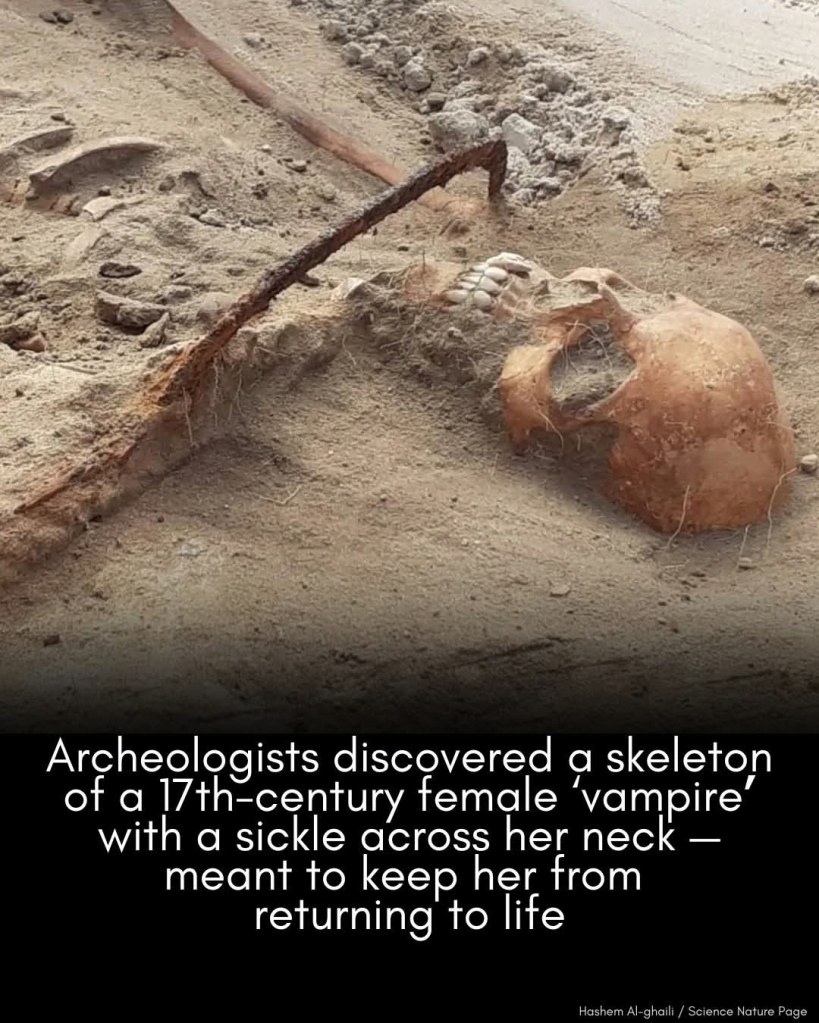
I’ve heard stories about varying ways suspected vampires were buried throughout history, but the way this one was unearthed at a Polish cemetery really caught me by surprise. Sure, you’ve probably heard the tales of suspected vampires being staked in the chest and then buried with the stake still inserted, or beheaded and buried with their head by their feet. Some bodies were burned to ash, some with rocks or bricks in their mouths to prevent them from chewing their way out of the graves. The one that stands out to me is the sickle buried with them just above the neck, so if they rise from the dead, they’re instantly beheaded. Sounds brutal, right? But, if it’s actually a vampire in that grave, you’re essentially saving lives. I’ve never seen any photos of a burial such as this until now.
Was this female from the 17th century a vampire?
Well, no, she wasn’t. If she had been, she would have been decapitated when she rose from her grave. The sickle was still in place when archaeologists unearthed her. Also, there was a padlock on her toe, which was also intact. So while she was not a vampire, at least in the sense we see vampires being, the people of her town suspected as much. They took measures to prevent her from coming back to reign terror down unto them.
While we know nothing about the woman, we can speculate a little to possibly determine the suspicions of the folks who buried her in the gravesite near Pień, Poland. In a lot of cases, both fictional and historical, suspected vampires were usually newcomers in towns/villages, or outcasts; in some cases, they were of high social status and appeared to be different than other folks in town. “The unidentified woman was buried with a silk scarf — a sign of high social class. The sickle is a clue that she was suspected of being a vampire, perhaps due to her physical abnormality of a large protruding tooth.”
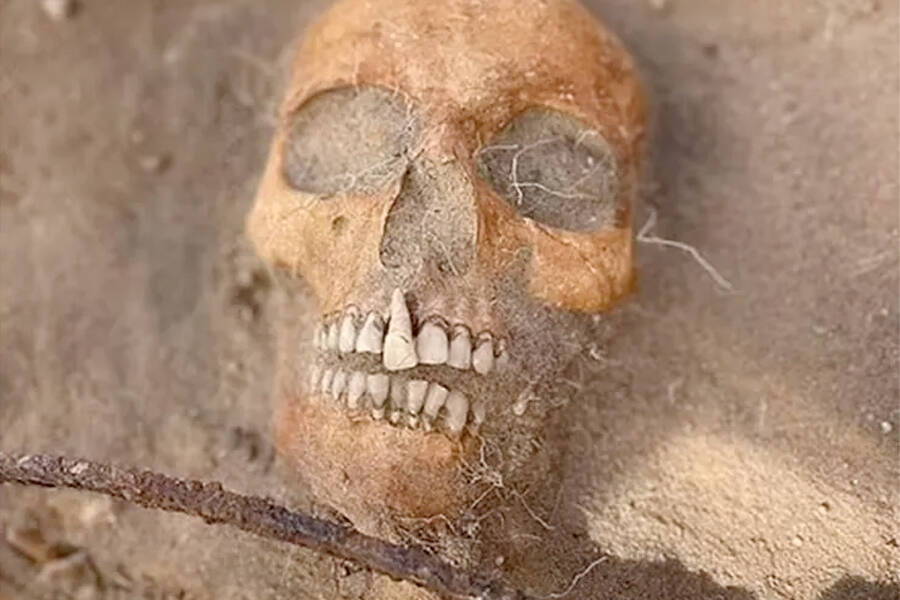
So she was potentially a wealthy member of society, and well, the tooth could raise suspicions all on its own. Pure speculation here, and this is simply due to me reading a lot of fictional stories about vampires throughout my life: depending on how she acted in public and how old she was when she passed away, I can maybe see why they thought she was a vampire, but I’d need a lot more details than what has been uncovered.
Regardless of the what, the how, and the why, it is still pretty wild to see the measures taken back then. And if this discovery wasn’t enough, the archaeologists unearthed several other skeletons buried the same way not too far from this cemetery. What was going on in Poland in the 17th century?


 jonsolosebastian.org