Jon Solo Sebastian 12/05/2025:
Howdy everyone! I’ve decided to once again republish my very first piece I posted on here. Welcome to Krampus and Krampusnacht!!
Who is Krampus?
He’s the counterpart to Saint Nicholas (Santa Claus, or Sinterklaas). While St. Nicholas is the bringer of joy and gifts to all good children, Krampus is the giver of beatings and one way tickets to hell. Krampus is a centuries-old folklore creature that originated from German Christmas tradition dating back to the 16th century. The actual origin date of Krampus is conflicting, some say it dates back to the 6th – 7th century, while others state it originated in the 12th or 16th century. As with many legends, their existence or the folktales could have started a long time ago under a different moniker, so the origin dates could be way off or right on.
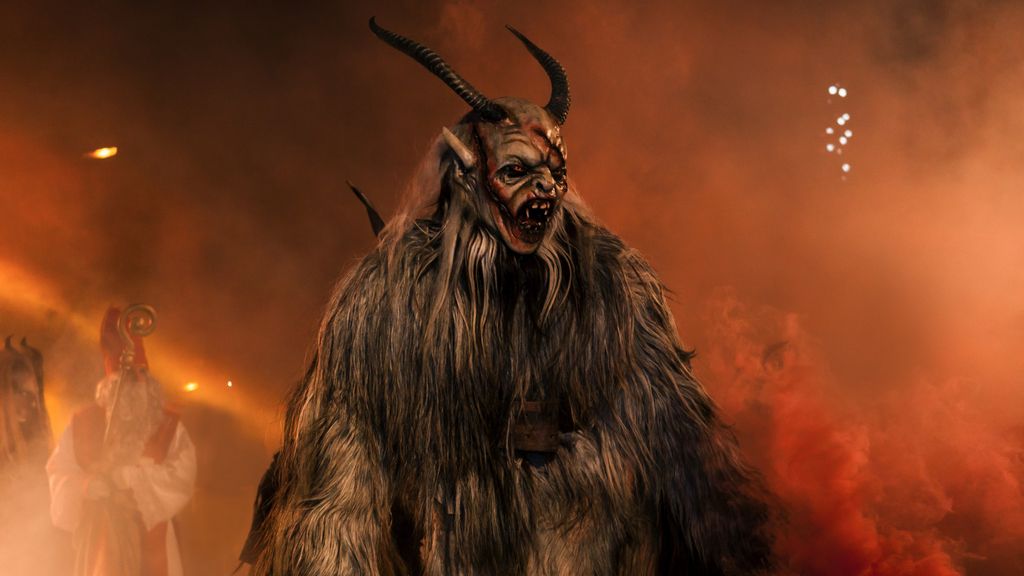
Etymologically, the term Krampus is thought to be derived from the German word “Krampen,” which translates to ‘claw’ – let the spookiness begin! At the start of December, in Germany, the Krampus terror would go viral. Children would begin to hear whispers of a dark-haired, half-goat, half-man, standing eight feet tall, on the lookout for children who have misbehaved. He comes to town, not on a sleigh with reindeer and a bag of gifts, but with sticks and chains. The sticks are used on the bad children to punish them. The chains are used to capture the exceptionally bad children, so he can take them down to hell.
The citing of the words ‘hell’ and the ‘underworld’ in my research, sent me down a wormhole where I tried to determine if Krampus was Norse in origin. A few articles claim Krampus is of Norse Mythology, the personification of the son of Hel. Other research disputes those claims.
Could Krampus have been spawned in the cradle of Norse mythology? Considering the conflicting timelines we discussed earlier, it’s certainly a possibility. Norse Viking parties began raiding the coastal regions of Rhineland in the 8th century. Much of Rhineland was designated Frankish territory then, and though Charlemagne fortified and fought back against the Norse raiders, he also hired them as mercenary soldiers for his own agenda. It’s only natural that as the raiding parties evolved into overlords, settlers, and the fabric of German Frankish society, so too would their pagan and folk traditions. Krampus could have simply become part of German cultural traditions and myth, just as legends about him have traveled across the globe today.

Traditionally, December 5th is referred to as Krampusnacht (‘Krampus Night’); this is the night when St. Nicholas and Krampus arrive to carry out their duties. St. Nicholas delivers gifts to the children who were good all year, while Krampus stalks down the naughty ones to beat them with sticks or branches. Some say he takes the worst ones back to hell with him, or eats them.
Using parables, myths, and all-powerful cultural figures as a tool to modify or control a child’s behavior isn’t exactly a contemporary concept. Anecdotal evidence and oral histories show that Krampus was a neat, but effective tool for keeping kids in line: don’t do your chores and you could get beaten, eaten, or dragged to hell. Be good, and you could end up with sweets and trinkets. Sometimes, parents would dress up as Krampus to “scare” their children; a different approach from today’s way of taking children to visit with St. Nicholas/Santa Claus, to tell him if they were good or bad, and which gifts they want most as a reward. You won’t see children lining up to visit with Krampus.
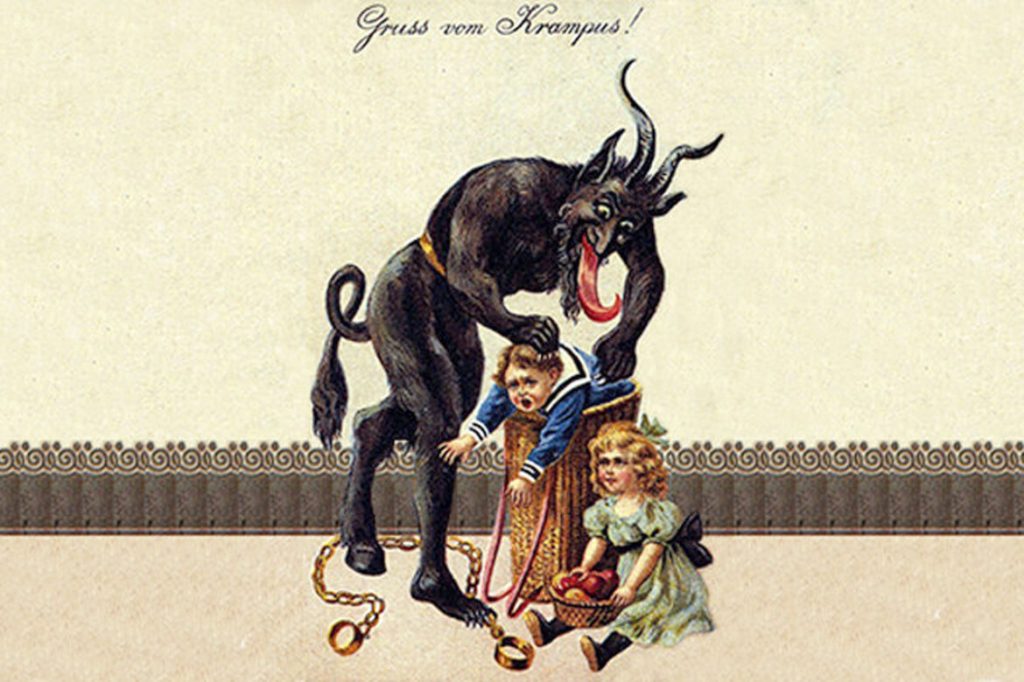
In the 1890’s in Austria and Germany, the postcard industry started booming. Krampus postcards (Krampuskarten) were all the rage. They weren’t the warm and fuzzy, well wishes, or uplifting spirits types of greeting cards either. These postcards were marked “Gruss Vom Krampus” (Greetings from Krampus), and depicted children being carried off on sleighs made of sticks, stuffed in satchels, or chained up
Krampus is supposed to instill fear into the young ones so they behave, but there are festivities held around the world celebrating him. Krampuslauf (Krampus Run) is a parade where people dress up like him, and march through the streets scaring spectators and chasing them around. Some are more friendly and fun for children, while some are geared more toward adults involving loud music, pyrotechnics, ritual re-enactments, and alcohol. After watching multiple videos of Krampuslauf, I can describe the parades as a blend of Halloween and Christmas with elements of the Mad Max films sprinkled in, which sounds like a fun time to me.

One last thing to leave you with—While Krampus is a terrifying and violent creature, he just wants you to behave and have a fun Christmas filled with joy, happiness, treats, and sweets. He doesn’t really want to take you to hell.


 jonsolosebastian.org