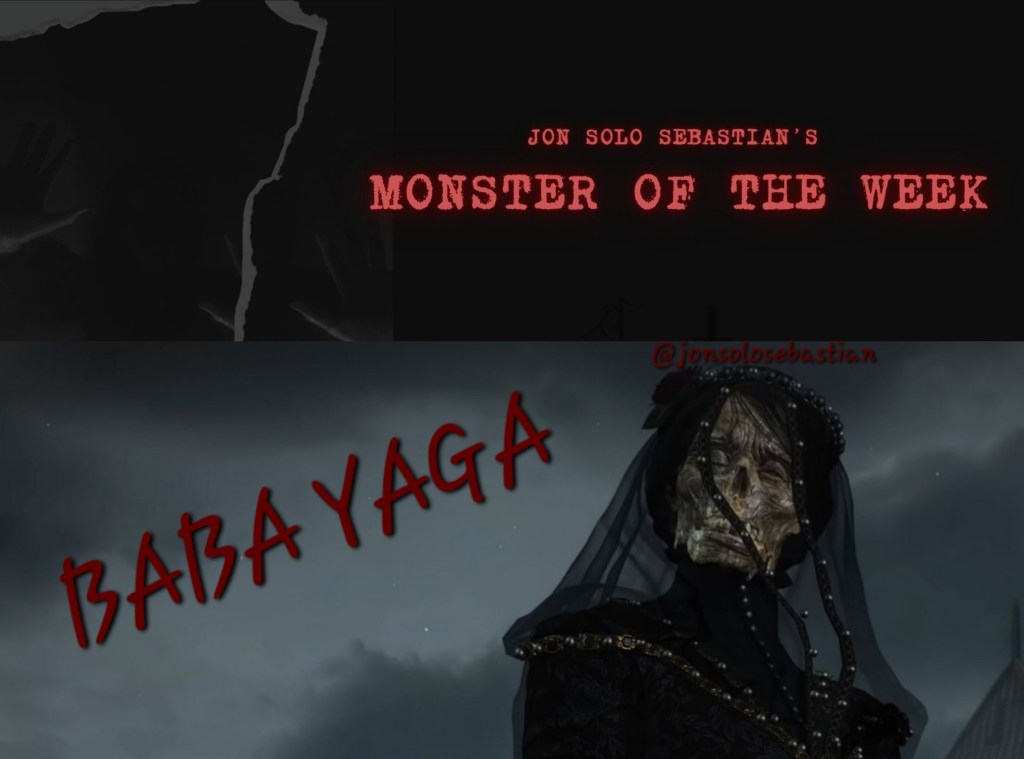
Jon Solo Sebastian 01/16/2026:
If you’re a fan of films, you might think of John Wick when you hear the name Baba Yaga. He’s not who we’ll be discussing here today, but I would like to talk about why the character played by the wonderful Keanu Reeves is called Baba Yaga in John Wick, and why it’s used inaccurately in the film. Don’t get me wrong, I love the John Wick franchise, and I appreciate their use of the nickname especially considering the relation to the character’s brutality. Before I get into that, though, let’s talk about who or what Baba Yaga really is.
Welcome to this week’s Monster of the Week—Baba Yaga
We’re dipping our toes into Slavic folklore for this one. Baba Yaga, according to britannica.com, is an ogress (a female giant ogre) that eats children. She lives deep in the forest in a hut that stands on two large bird or chicken legs, which we get to see portrayed in another popular franchise—The Witcher series on Netflix. Though Baba Yaga isn’t in the series, the Deathless Mother or Voleth Meir character of season two of The Witcher, is heavily influenced by the wicked witch of Slavic folktale. The Netflix series showrunner, Lauren Hissrich, has said she chose Baba Yaga as her main influence for the Deathless Mother because every culture has a version of the witch, but she wanted to make this character as close to the Slavic Legend as possible.
The Character Sheet of Baba Yaga
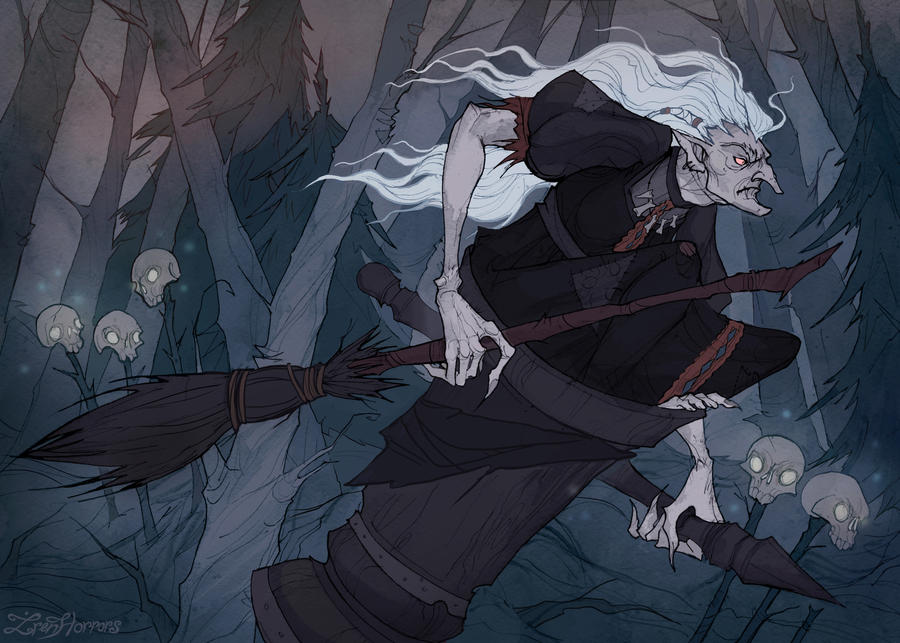
She is a witch who takes on the form of an old woman. She either resembles the Old Hag, or just simply an old woman usually wearing a hooded cloak or a dress. Her skin is pale white, her hair is shaggy, and her body is thin and boney. Some stories add sharp teeth and glowing eyes to add some scary bits to the old woman that likes to cook and eat children—like that isn’t bad enough on its own. Her hut with chicken legs is tucked deep into the woods, and it’s believed to be surrounded by a fence made of the bones of her victims. Unlike typical witches, she doesn’t ride a broom. Her vehicle of choice is comically riding inside a mortar while wielding a pestle. Imagine being chased by that. I would laugh, but I’d probably still run real fast if I knew what was good for me.
I imagine that up to this point you’ve thought of her as just another witch of folktales, but it turns out she is a complex old lady. Some sources compare her to one of my favorite characters of Norse mythology, the trickster—Loki. She is viewed as a heroine in some legends, a villain in others, and sometimes a little bit of both. She plays whichever side benefits her; which is Loki-like. One thing I know for sure whether we’re talking about Loki or Baba Yaga: it’s never a safe bet to make a deal with them. They always want or demand, or trick you into something in return.
Baba Yaga in Pop Culture
The Witcher
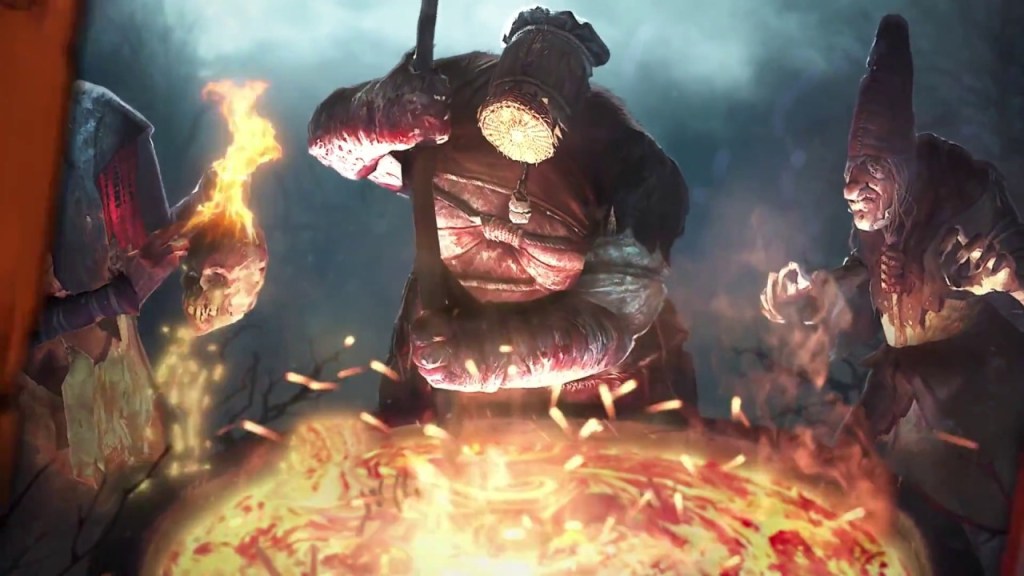
I’ve mentioned John Wick and The Witcher, but I’d like to give a little more information on those two and their relation to Baba Yaga. Aside from the Deathless Mother— Voleth Meir being a nod to her in the streaming series, we also have the Crones in The Witcher 3: Wild Hunt. In the folktales, sometimes Baba Yaga manifests into three sisters. The Crones, are three sisters, and are swamp dwellers that live in a similar looking hut in the woods. They are more on the side of grotesque-looking witches, but they are able to change their appearance at will to deceive those who seek them out. They were suspected to appear in The Witcher series, but the showrunner went with the Deathless Mother, instead, while also giving her more of the Baba Yaga characteristics than the Three Crones held.
John Wick
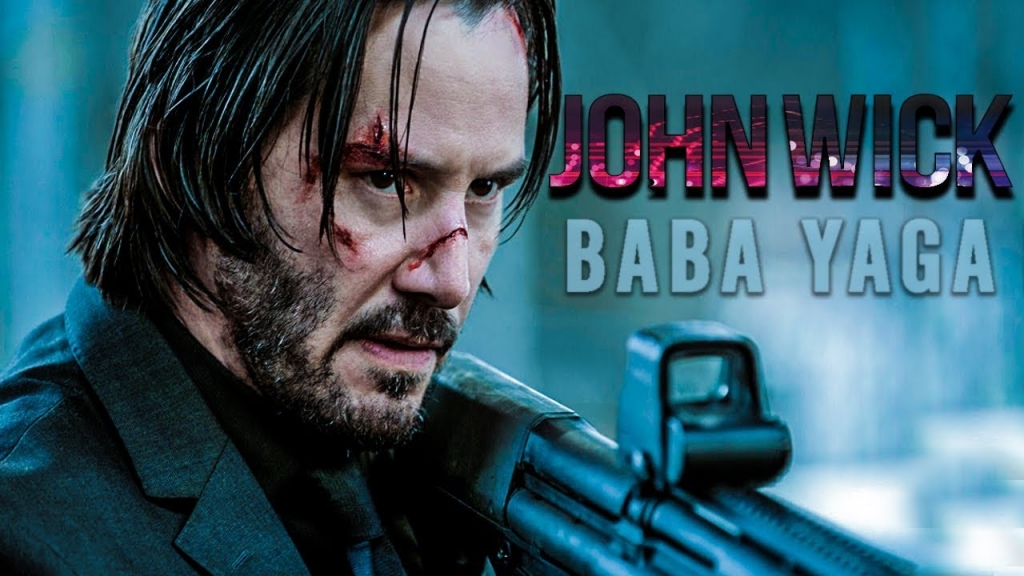
Remember at the beginning of this piece I mentioned John Wick’s nickname is used inaccurately? In the movie, they call him Baba Yaga and refer to it being a Russian boogeyman. We know she isn’t a boogeyman, and John Wick isn’t a wicked witch. The only real connection between the two aside from people fearing them is their kill-count. “In fact, save for their penchant for murder, John Wick does not share any other similarity with Baba Yaga — he is not malevolent nor does he seek to harm the innocent. On the contrary, he wants revenge on those who have done wrong. The use of Baba Yaga in the John Wick franchise is confusing and a bit unnerving if his character is based primarily on his nickname.” The nickname gives the character a sort of dark vibe, which adds a little, but not much, depth; even if it is inaccurate. It’s a fun ‘Easter Egg’ for folks who’ve heard of Baba Yaga, but it doesn’t add much to the story like the strong inspiration drawn from it for The Witcher game and streaming series. I’m a big fan of both franchises, so it’s fun for me to see her included in them, even if it’s only by name.
Do you have any stories about Baba Yaga you’d like to share with me? Have you seen her or heard her name mentioned in other stories? Does a version of her show up in other video games besides The Witcher? Let me know!


 jonsolosebastian.org